
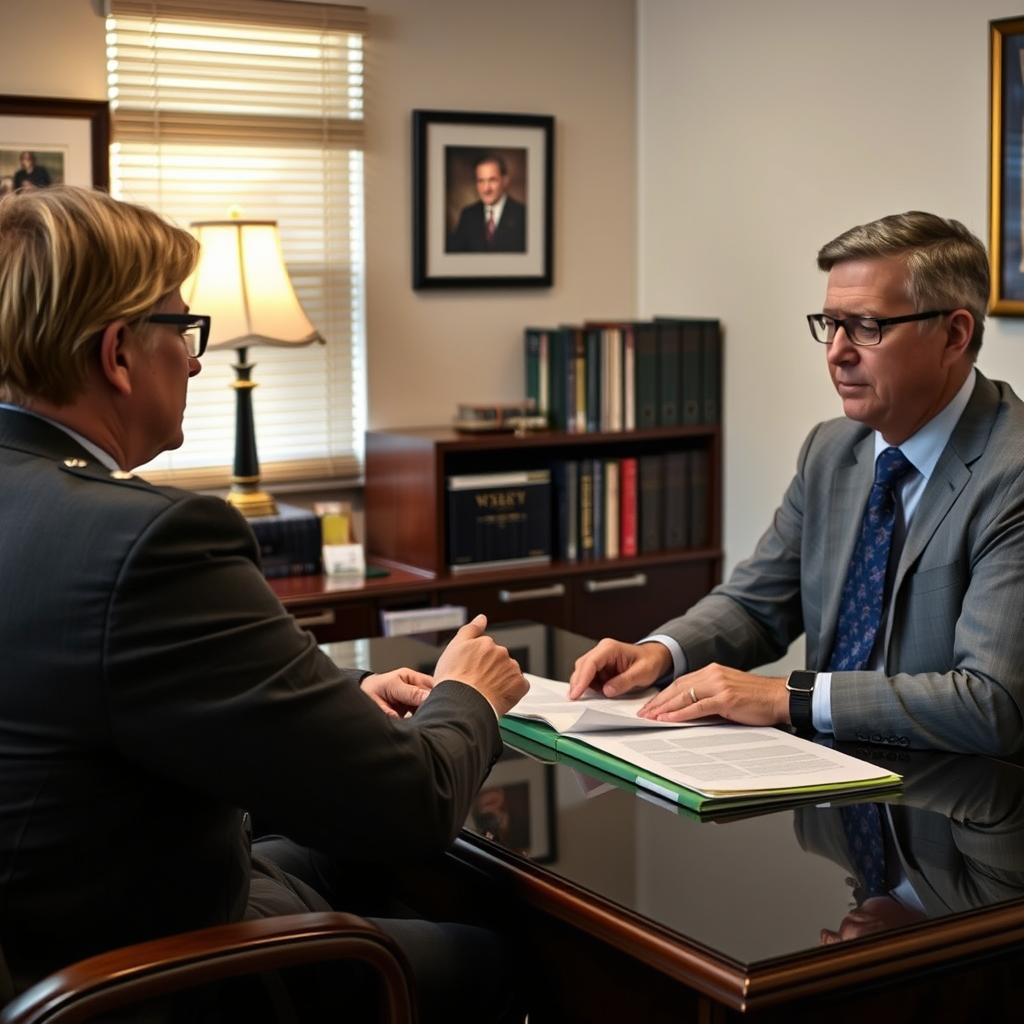
Retirement Account Division Lawyer Fairfax, VA
When a marriage ends in Fairfax, Virginia, one of the most consequential financial issues is how retirement accounts will be divided. Virginia is an equitable distribution state, meaning the court divides marital property fairly—but not necessarily equally—under Va. Code § 20‑107.3. Pensions, 401(k) plans, IRAs, thrift savings plans, and other retirement assets accumulated during the marriage are generally classified as marital property and must be addressed in the divorce. Dividing these accounts correctly often requires a qualified domestic relations order (QDRO) to avoid early-withdrawal penalties and unintended tax consequences. For a spouse whose retirement security may depend on a fair share of these assets, having a lawyer who understands both the statutory framework and the specific practices of the Fairfax County Circuit Court is essential. Mr. Sris, Owner and Founder of Law Offices Of SRIS, P.C., and his Of Counsel team bring extensive combined legal experience to complex property division. To discuss your retirement account division matter, call (888) 437‑7747. Law Offices Of SRIS, P.C. – Advocacy Without Borders.
Dividing Retirement Accounts in a Virginia Divorce
Virginia’s equitable distribution process classifies each asset as marital, separate, or hybrid. Retirement benefits earned or accumulated during the marriage are presumptively marital property under Va. Code § 20‑107.3(A). The court considers eleven statutory factors to determine a fair division, including the duration of the marriage, the contributions of each spouse to the family’s well‑being, and the tax consequences of any proposed allocation. For defined‑benefit pensions, the marital share is typically determined by the “coverture fraction”—the portion of the total benefit that accrued during the marriage. For defined‑contribution plans such as a 401(k) or IRA, the division is usually based on the increase in account value from the date of marriage to the date of separation.
Employer‑sponsored qualified plans generally require a QDRO to transfer a portion of the benefits to the non‑employee spouse without triggering a taxable distribution. The QDRO must comply with both the plan’s terms and the Employee Retirement Income Security Act. The 2019 revision to Va. Code § 20‑107.3(g), which addressed certain procedural aspects of retirement‑benefit division, is an area in which the firm has direct insight: Mr. Sris testified before the Virginia House Courts of Justice Committee in support of 2019 HB 635 (chief patron Del. David Bulova). Many high‑asset cases also involve valuation of business interests, executive deferred compensation, and stock options, all of which intersect with retirement planning. Mr. Sris and his Of Counsel work with forensic accountants and business valuators when complex valuations are required.
Frequently Asked Questions
How are retirement accounts divided in a Fairfax, Virginia divorce?
Retirement accounts accumulated during the marriage are treated as marital property and divided under Virginia’s equitable distribution statute, Va. Code § 20‑107.3. The court considers the source of funds, the length of the marriage, and each spouse’s contributions. The marital portion of a defined‑benefit plan is often calculated using the time rule; for a defined‑contribution plan, the increase in value during the marriage is typically divided. The court may award a lump sum from one account or direct a QDRO for employer‑sponsored plans. Whether the division is 50/50 depends on all eleven statutory factors, not on a fixed formula.
What is a QDRO and when is it necessary?
A qualified domestic relations order, or QDRO, is a court order that directs a retirement‑plan administrator to pay all or part of a participant’s benefits to an alternate payee—typically the former spouse—without triggering early‑withdrawal penalties or immediate income tax to the participant. QDROs are required for most employer‑sponsored qualified plans under ERISA, including 401(k)s, 403(b)s, and traditional pensions. IRAs generally do not require a QDRO; they can be divided by transfer incident to divorce. Drafting a QDRO that satisfies both the plan’s specific rules and federal law is a technical process that benefits from experienced counsel.
Does Virginia treat military retirement differently?
Yes, military retired pay is treated as marital property to the extent it was earned during the marriage, and it is divided under the Uniformed Services Former Spouses’ Protection Act, not under state equitable distribution law alone. The Department of Defense will honor a state court order dividing military retired pay if the court had jurisdiction and the order meets certain requirements. The ten‑year overlap rule often determines whether the former spouse can receive direct payment from the Defense Finance and Accounting Service. Mr. Sris and his Of Counsel handle cases involving military and federal retirement accounts throughout Northern Virginia.
Can I keep my 401(k) if it was funded before marriage?
The portion of the 401(k) that existed before the marriage is classified as separate property and is not subject to division, but any contributions or growth during the marriage are generally marital. Tracing the pre‑marital portion requires clear documentation such as account statements from the date of marriage. If the account has been commingled with other funds, tracing can become more complicated. The court will need to determine the separate and marital components, often with the help of a financial experienced attorney. Presenting solid records early can reduce litigation over classification.
How does Mr. Sris and his Of Counsel handle a retirement division case?
The firm takes a comprehensive approach: identifying all retirement assets, working with financial attorneys when needed to value complex holdings, drafting the property settlement agreement or litigating the division in Fairfax County Circuit Court, and preparing the QDROs necessary to effectuate the division. Mr. Sris and his Of Counsel bring experience with high‑net‑worth estates and multi‑jurisdictional issues. They aim to resolve cases through negotiated settlement when possible but are prepared for contested litigation. Every matter receives individual case review, and the client stays informed about the process from discovery through post‑divorce implementation.
Do I need a lawyer for retirement account division in Virginia?
You are not legally required to hire a lawyer, but the complexity of retirement‑account division—especially when a QDRO is needed—makes legal representation highly advisable. A poorly drafted QDRO can lead to tax penalties, loss of benefits, or delayed implementation. An attorney can also identify hidden marital assets, argue for a more favorable share under the statutory factors, and ensure that the final decree accurately reflects the agreement. For guidance on your specific situation, reach Law Offices Of SRIS, P.C. at (888) 437‑7747.
How does the Fairfax County Circuit Court handle equitable distribution?
The Fairfax County Circuit Court sits at 4110 Chain Bridge Road in Fairfax and has exclusive original jurisdiction over divorce and equitable distribution matters. Cases are docketed on the court’s civil calendar, and the timeline varies by complexity and judicial assignment. The court may require mediation or a settlement conference before trial. For retirement‑related disputes, the court commonly relies on forensic accountants and pension‑valuation attorneys. Mr. Sris and his Of Counsel appear regularly in this court and are familiar with its local practices and expectations.
What should I bring to a consultation about dividing retirement assets?
Bring your most recent statements for every retirement account, pension‑plan summary documents, any prenuptial or postnuptial agreement, and your spouse’s financial disclosures if available. Also bring tax returns, pay stubs, and records of any inheritances or gifts received during the marriage. This information allows the attorney to begin classifying assets and estimating the marital share. During the consultation, the attorney will explain the Virginia equitable distribution factors and outline a strategy tailored to your financial goals. For a consultation, reach Mr. Sris and his Of Counsel at (888) 437‑7747.
Can retirement assets be divided without going to court?
Yes, many Virginia divorces resolve without trial through a negotiated property settlement agreement that addresses all assets, including retirement accounts. Once both parties sign the agreement and it is incorporated into the final divorce decree, the division is binding. Mediation or collaborative negotiation can help reach a compromise on issues such as whether to offset one spouse’s retirement interest against other marital assets. If an agreement cannot be reached, the matter proceeds to trial before the Fairfax County Circuit Court. To discuss the details of your matter, contact Law Offices Of SRIS, P.C. at (888) 437‑7747.
Does the firm handle federal employee retirement (FERS/CSRS) division?
Yes, Mr. Sris and his Of Counsel handle the division of federal civilian retirement benefits, including FERS and CSRS plans. These benefits are divided through a court order acceptable for processing by the Office of Personnel Management. The order must comply with OPM’s regulations, which differ from the rules for private‑sector plans. The firm works with clients to ensure that the marital portion of a federal annuity or survivor benefit is properly addressed in the separation agreement and the final decree. Experience with federal‑employee benefits is particularly relevant in the Washington, D.C. Metropolitan area, where many residents work for the government.
About Mr. Sris and His Of Counsel Team
Mr. Sris, Owner and Founder of Law Offices Of SRIS, P.C., has practiced since 1997 and is admitted in Virginia, Maryland, the District of Columbia, New Jersey, and New York. His background includes direct insight into retirement‑account division through legislative testimony: Mr. Sris testified before the Virginia House Courts of Justice Committee in support of 2019 HB 635 (chief patron Del. David Bulova), which revised Va. Code § 20‑107.3(g). Mr. Sris and his Of Counsel bring extensive combined legal experience to matters involving equitable distribution, including complex portfolios that require QDROs and valuation of closely held business interests. Results may vary. The firm’s Fairfax location serves clients throughout Fairfax, Burke, Centreville, Chantilly, Herndon, Reston, McLean, Vienna, Tysons, Oakton, Springfield, Annandale, and the Falls Church area. To request a consultation, call (888) 437‑7747.
Attorney advertising. Prior results do not guarantee a similar outcome.
Case results depend on a variety of factors unique to each case.