
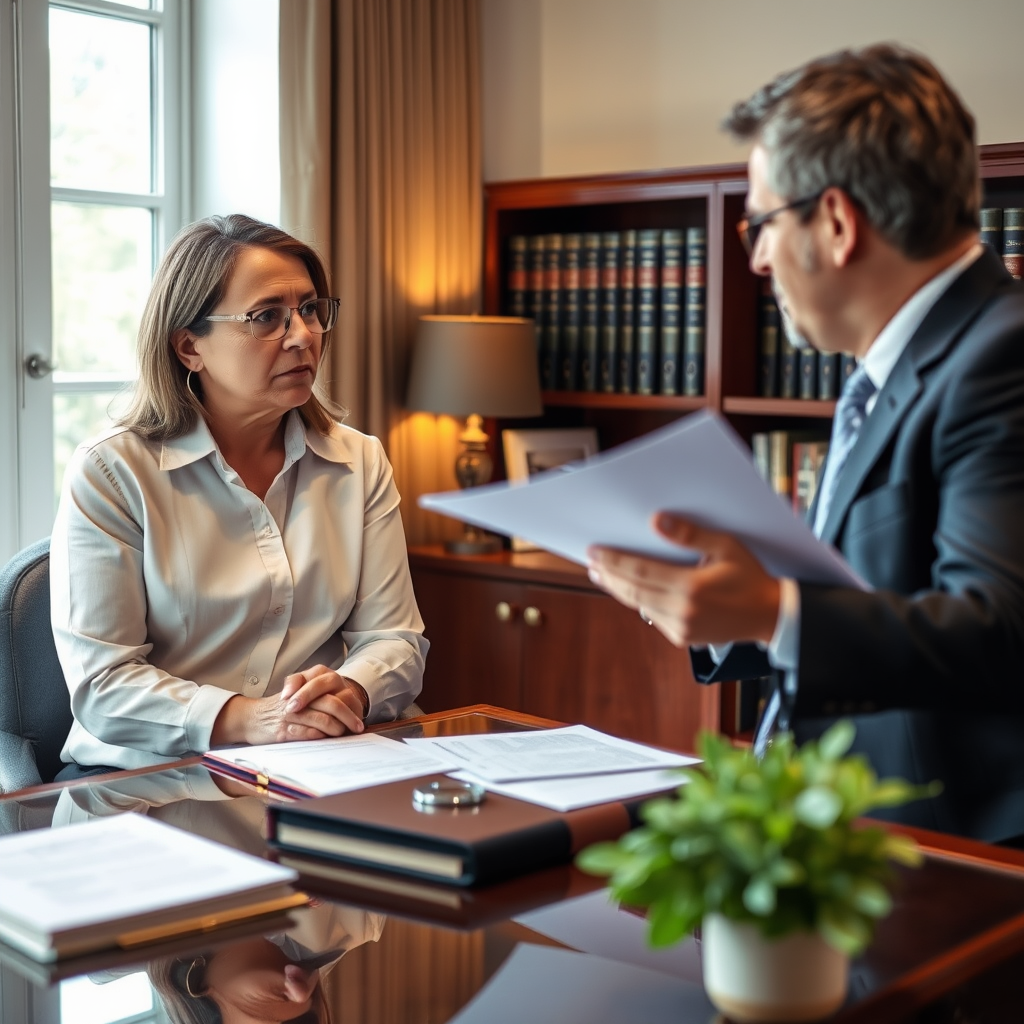
Spousal Support Lawyer Falls Church, VA
Spousal support – often called alimony – is a significant financial issue in many Virginia divorces. For individuals in Falls Church, whether you anticipate paying or receiving support, understanding how the Falls Church Circuit Court at 300 Park Avenue approaches these matters under Va. Code § 20-107.1 is essential. The court weighs 13 statutory factors, including the duration of the marriage, each spouse’s earning capacity, the standard of living established during the marriage, and the contributions each party made to the family’s well-being. No single factor dictates the outcome. Law Offices Of SRIS, P.C., founded in 1997, guides clients through spousal support determinations in Falls Church and throughout Northern Virginia. Mr. Sris, the firm’s Owner and Founder, and his Of Counsel team bring extensive experience in family law, working toward arrangements that are fair and sustainable. For a confidential consultation, reach our location at (888) 437-7747. Law Offices Of SRIS, P.C. – Advocacy Without Borders.
What Spousal Support Means in Falls Church, Virginia
In Falls Church, spousal support is a court-ordered payment from one spouse to the other designed to ease any financial disparity caused by the end of the marriage. It is distinct from property division; the court determines an equitable distribution of assets under Va. Code § 20-107.3 separately from any support award. The Falls Church Circuit Court, which handles all divorce, equitable distribution, and spousal support matters, applies the 13 factors enumerated in Va. Code § 20-107.1. These factors include the age and physical and mental condition of the parties, the duration of the marriage, the contributions of each spouse to the family (both monetary and nonmonetary), and the tax consequences to each party. The court retains broad discretion, so outcomes vary considerably based on the specific financial picture and history of each couple.
Falls Church, as an independent city with its own Circuit Court, follows Virginia’s equitable distribution framework. The court may award temporary support (pendente lite) while the divorce is pending, as well as a final support order. Support can be set for a defined duration or, in limited circumstances, for an indefinite period—typically when a spouse cannot be expected to become self-supporting due to age, health, or other compelling reasons. The presence of a marital settlement agreement signed by both parties can resolve support terms outside of court, but any agreement must still be approved by the judge. Residents of Falls Church and surrounding communities—served by the firm’s Fairfax Location at 4008 Williamsburg Court—can seek experienced counsel to ensure their interests are protected under Virginia law.
How Mr. Sris and His Of Counsel Handle Spousal Support Cases
Every spousal support case begins with a careful review of the financial circumstances of both spouses. Mr. Sris and his Of Counsel team gather income documentation, expense records, tax returns, and evidence of the marital standard of living. They assess whether support is likely to be awarded and the potential amount and duration, applying the statutory factors to the client’s specific facts. If representation is on behalf of the spouse seeking support, the focus is on demonstrating need and the other spouse’s ability to pay. If the client is the potential payor, the emphasis is on accurate income calculation and arguments regarding the other spouse’s earning capacity.
Negotiation and, when necessary, litigation are both viable paths. Many Falls Church spousal support disputes are resolved through a signed property settlement agreement that addresses support along with property division and custody, avoiding a contested hearing. When an agreement cannot be reached, Mr. Sris and his Of Counsel appear in the Falls Church Circuit Court to present evidence and argue the case. They also handle post-divorce matters, including requests to modify or enforce existing spousal support orders when circumstances change. Throughout the process, clients receive candid guidance about Virginia law and realistic expectations for the outcome. Results may vary.
About Mr. Sris and His Of Counsel Team
Mr. Sris, Owner and Founder of Law Offices Of SRIS, P.C., has practiced law since 1997 and is admitted in Virginia, Maryland, the District of Columbia, New Jersey, and New York. A former prosecutor, he brings a depth of courtroom experience to family law matters, including complex spousal support disputes. He testified before the Virginia House Courts of Justice Committee in support of 2019 HB 635 (chief patron Del. David Bulova). Mr. Sris and his Of Counsel bring over 120 years of combined legal experience, and the firm has documented over 4,739 firm-wide results. Results may vary. They have documented 24 total case results across all practice areas in Falls Church City (favorable outcome in all reported instances).
Frequently Asked Questions
How is spousal support determined in Falls Church, Virginia?
Virginia courts determine spousal support by applying 13 statutory factors under Va. Code § 20-107.1, and no single formula controls the outcome. The Falls Church Circuit Court considers evidence such as income, the duration of the marriage, each spouse’s contributions, and the standard of living during the marriage. Support can be temporary while the divorce is pending or final after the divorce decree. The judge has broad discretion, so similar financial facts can lead to different results depending on the specific circumstances. An experienced family law attorney can help present a thorough picture of the financial realities to the court.
What factors does a Falls Church judge consider for spousal support?
The court weighs 13 factors listed in Va. Code § 20-107.1, including the obligations and needs of each party, the duration of the marriage, how marital property was divided, the age and health of each spouse, and the contributions of each party to the family’s well-being. The court may also consider the earning capacity of each spouse, the tax consequences of any support award, and whether one spouse has devoted significant time to the family rather than career advancement. The weight given to each factor depends on the unique facts of the case. An attorney can help gather the evidence needed to address each factor persuasively.
How long does spousal support last in Virginia?
Support can be set for a defined term or, in limited cases, for an indefinite duration, depending on the facts and the statutory factors. Many awards are rehabilitative—intended to allow the recipient spouse to obtain education, training, or experience to become self-supporting—and last for a specific period. Indefinite support may be ordered when the recipient cannot reasonably be expected to become self-supporting due to advanced age, disability, or other compelling circumstances established at trial. The length of the marriage and the disparity in earning capacity heavily influence the duration determination. An experienced lawyer can explain which type may apply in your situation.
Do I need a lawyer for a spousal support case in Falls Church?
You are not legally required to have a lawyer, but spousal support involves complex financial and legal issues that can significantly affect your future, making experienced legal guidance important. A lawyer can ensure your income and expenses are accurately presented, identify hidden marital assets, and argue for or against support using the statutory factors. Attempting to handle support negotiations or a court hearing without counsel can leave you at a disadvantage, especially if the other side has representation. A consultation with a family law attorney can help you understand your options and the likely range of outcomes.
Can a spousal support order be modified?
Yes, a Virginia court can modify a support order upon a showing of a material change in circumstances. Common grounds include a substantial change in the income of either party, the recipient’s remarriage (or cohabitation in a relationship analogous to marriage under certain conditions), or a significant change in the needs of either spouse. The party seeking modification must petition the Falls Church Circuit Court that issued the original order and present evidence of the changed circumstances. Mr. Sris and his Of Counsel handle modification requests and can advise whether your situation meets the legal threshold for a change.
What if my spouse refuses to pay court-ordered support?
Enforcement remedies are available, including income withholding, contempt proceedings, and judgment for arrearages. If a former spouse fails to comply with a spousal support order, the receiving party can ask the court to enforce the order through show cause summons, wage garnishment, or other measures. Willful nonpayment may lead to a finding of contempt, which can carry fines or even jail time. Prompt action is important because arrearages accumulate over time. An attorney can help you initiate enforcement proceedings and pursue what is owed under Virginia law.
Related locations: Family Law Lawyer Fairfax County · Family Law Lawyer Fairfax (City) · Family Law Lawyer Prince William County · Family Law Lawyer Manassas (City) · Family Law Lawyer Manassas Park (City)
Attorney advertising. Prior results do not guarantee a similar outcome.
Results may vary.
Case results depend on a variety of factors unique to each case.