
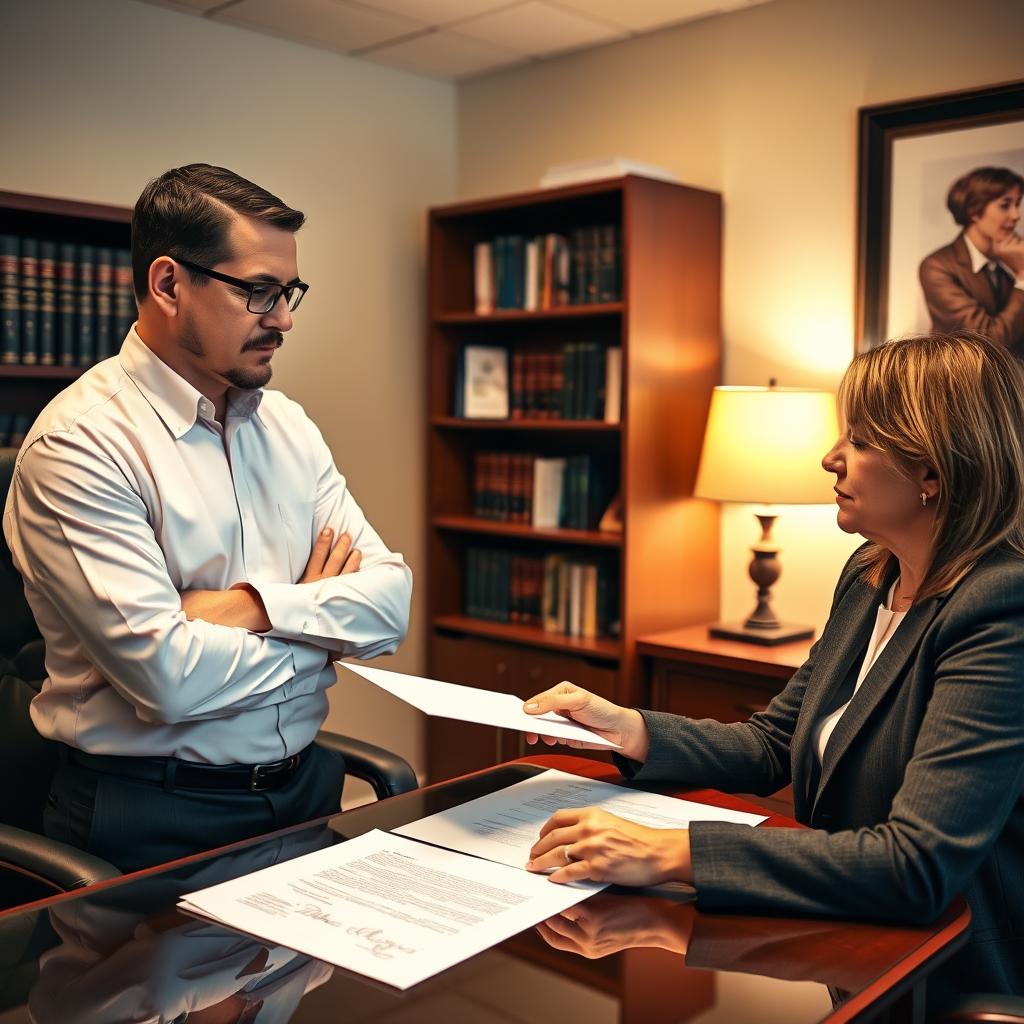
Postnuptial Agreement Lawyer Fairfax County, VA
A postnuptial agreement is a contract between spouses entered into after marriage that governs property division, spousal support, and related financial matters in the event of divorce or death. In Virginia, postnuptial agreements are governed by the Virginia Premarital Agreement Act (Va. Code § 20‑147 et seq.), which sets out the requirements for enforceability and the procedures for challenging such agreements. Fairfax County residents often seek a postnuptial agreement to clarify financial rights and responsibilities, protect separate property, or address changed circumstances during the marriage. The Fairfax County Circuit Court, located at 4110 Chain Bridge Road, handles disputes concerning the validity and enforcement of postnuptial agreements, as well as the equitable distribution of marital property in divorce proceedings. Because postnuptial agreements involve significant financial and legal consequences, working with an experienced family law attorney is important to ensure the document reflects your intentions and meets Virginia’s statutory requirements. Mr. Sris and his Of Counsel team at Law Offices Of SRIS, P.C. provide representation for clients throughout Fairfax County in the negotiation, drafting, and enforcement of postnuptial agreements. To discuss your situation, reach our firm at (888) 437‑7747. Law Offices Of SRIS, P.C. – Advocacy Without Borders.
What Postnuptial Agreements Mean in Fairfax County, Virginia
In Fairfax County, a postnuptial agreement is a flexible tool that allows spouses to define their financial relationship without having to wait for a divorce filing. Unlike a separation agreement, which is typically executed when a marriage is already irretrievably broken, a postnuptial agreement is created while the parties remain committed to the marriage. The agreement can address a range of issues, including how assets and debts will be classified and divided, whether spousal support will be paid, and how certain property will be managed during the marriage. Because Fairfax County has a high concentration of professionals, government employees, and business owners, complex financial portfolios are common, and a well‑drafted postnuptial agreement can help prevent costly litigation later.
Virginia is an equitable distribution state, meaning that in a divorce, marital property is divided fairly but not necessarily equally. A postnuptial agreement can override the default equitable distribution rules, allowing spouses to create their own allocation framework as long as it meets statutory standards. Under Va. Code § 20‑151, a postnuptial agreement is enforceable unless the party against whom enforcement is sought proves that the agreement was not entered into voluntarily or was unconscionable when it was executed. The Fairfax County Circuit Court is the court of jurisdiction for all matters involving postnuptial agreements within the county. Individuals considering a postnuptial agreement should understand that full financial disclosure, independent legal advice, and careful drafting are critical to withstand judicial scrutiny.
How Mr. Sris and His Of Counsel Handle Postnuptial Agreement Cases
Mr. Sris and his Of Counsel take a thorough, detail‑oriented approach when assisting clients with postnuptial agreements. The process begins with a confidential consultation to understand each spouse’s goals, financial situation, and concerns. The legal team evaluates existing assets and debts, projected future income, business interests, retirement accounts, and other financial considerations. From there, they draft an agreement that is tailored to the client’s specific circumstances rather than using a generic template. Because Virginia law imposes strict disclosure requirements, the attorneys ensure that both parties receive complete and transparent information before signing.
If a dispute arises over the validity or interpretation of an existing postnuptial agreement, Mr. Sris and his Of Counsel provide experienced representation in Fairfax County Circuit Court. They analyze the agreement’s compliance with the Premarital Agreement Act, examine the voluntariness of execution, and assess whether there was any overreaching or duress. The goal is to protect the client’s interests while working toward a resolution that preserves the integrity of the agreement where possible. Throughout the process, clients are kept informed of the legal options and the potential outcomes under Virginia law.
About Mr. Sris and His Of Counsel Team
Mr. Sris is the Owner and Founder of Law Offices Of SRIS, P.C., which has been serving clients across Virginia, Maryland, the District of Columbia, New Jersey, and New York since 1997. He brings a background as a former prosecutor, providing a strategic perspective in all family law matters, including postnuptial agreements. Mr. Sris testified before the Virginia House Courts of Justice Committee in support of 2019 HB 635 (chief patron Del. David Bulova), a bill that revised the equitable distribution statute. His Of Counsel team includes attorneys with extensive experience in Virginia domestic relations law. Mr. Sris and his Of Counsel bring extensive combined legal experience to every postnuptial agreement matter. Results may vary.
Frequently Asked Questions
What is a postnuptial agreement in Virginia?
A postnuptial agreement is a written contract between spouses, created after marriage, that establishes how property, debts, and spousal support will be handled if the marriage ends. Unlike a prenuptial agreement, which is executed before the wedding, a postnuptial agreement is formed during the marriage. In Virginia, such agreements are governed by the Virginia Premarital Agreement Act. They can address the division of assets, allocation of responsibility for debts, and any other financial matter the parties choose, provided the agreement is not unconscionable and was entered into voluntarily with full disclosure. The Fairfax County Circuit Court enforces these agreements as long as they meet the statutory criteria. For specific guidance, reach Law Offices Of SRIS, P.C. at (888) 437‑7747.
Are postnuptial agreements enforceable in Fairfax County, Virginia?
Yes, a postnuptial agreement is generally enforceable in Fairfax County if it complies with Va. Code § 20‑151 and was executed voluntarily with full financial disclosure and without unconscionability. The party seeking to avoid enforcement carries the burden of proving that the agreement was not entered into voluntarily or was unconscionable at the time it was made. Virginia courts will scrutinize whether both spouses received independent legal advice, whether adequate disclosure of assets and liabilities occurred, and whether any duress or fraud was present. The Fairfax County Circuit Court has jurisdiction over disputes regarding the enforceability of postnuptial agreements. An experienced family law attorney can help structure the agreement to withstand judicial review.
What are the requirements for a valid postnuptial agreement in Virginia?
Under Virginia law, a valid postnuptial agreement must be in writing, signed by both parties, and entered into voluntarily with a full and fair disclosure of each spouse’s financial circumstances. While the statute does not mandate independent legal representation for each spouse, having separate legal counsel is strong evidence that the agreement was entered into voluntarily and without duress. The agreement cannot be unconscionable, and its terms must be clear and unambiguous. The Premarital Agreement Act applies equally to postnuptial agreements, so any agreement must comply with Va. Code § 20‑147 et seq. Mr. Sris and his Of Counsel guide clients through the drafting and execution process to help ensure every requirement is met.
How does a postnuptial agreement differ from a separation agreement or marital settlement agreement?
A postnuptial agreement is created during an intact marriage to plan for the possibility of future divorce, while a separation agreement or marital settlement agreement is made after the marriage has broken down and typically addresses the immediate terms of divorce. Postnuptial agreements focus on establishing property rights and support obligations prospectively. Separation agreements resolve all outstanding issues—property division, spousal support, custody, and child support—when the spouses are already separated or contemplating divorce. In Fairfax County, both types of agreements can be incorporated into a final divorce decree. The appropriate instrument depends on the timing and the parties’ intent.
Can a postnuptial agreement address child custody or support?
A postnuptial agreement in Virginia may address child support as long as it meets the requirements of law, but child custody and parenting time provisions are always subject to the court’s review based on the best interests of the child. Virginia courts retain authority to modify custody arrangements regardless of any prior agreement between the parents. Provisions regarding child support must be reasonable and consistent with statutory guidelines at the time of enforcement. A family law attorney can advise on which child‑related matters can be appropriately included in a postnuptial agreement and which must remain flexible.
Do I need a lawyer to create a postnuptial agreement in Fairfax County?
Virginia law does not require each spouse to be represented by separate legal counsel, but having an experienced family law attorney is strongly advisable to ensure the agreement is enforceable and protects your interests. A lawyer can help you understand your rights, ensure full and accurate financial disclosure, and draft provisions that comply with the Premarital Agreement Act. Without professional legal guidance, an agreement may be vulnerable to later challenge on grounds of voluntariness, unconscionability, or inadequate disclosure. For a consultation, reach Mr. Sris and his Of Counsel at (888) 437‑7747.
For family law representation in nearby Virginia localities, visit our pages on Prince William County family law, Loudoun County family law, Stafford County family law, and Arlington County family law.
Additional authoritative resources: Virginia Code Title 20 – Domestic Relations and Fairfax County Circuit Court.
Attorney advertising. Prior results do not guarantee a similar outcome. Results may vary.
Case results depend on a variety of factors unique to each case.