
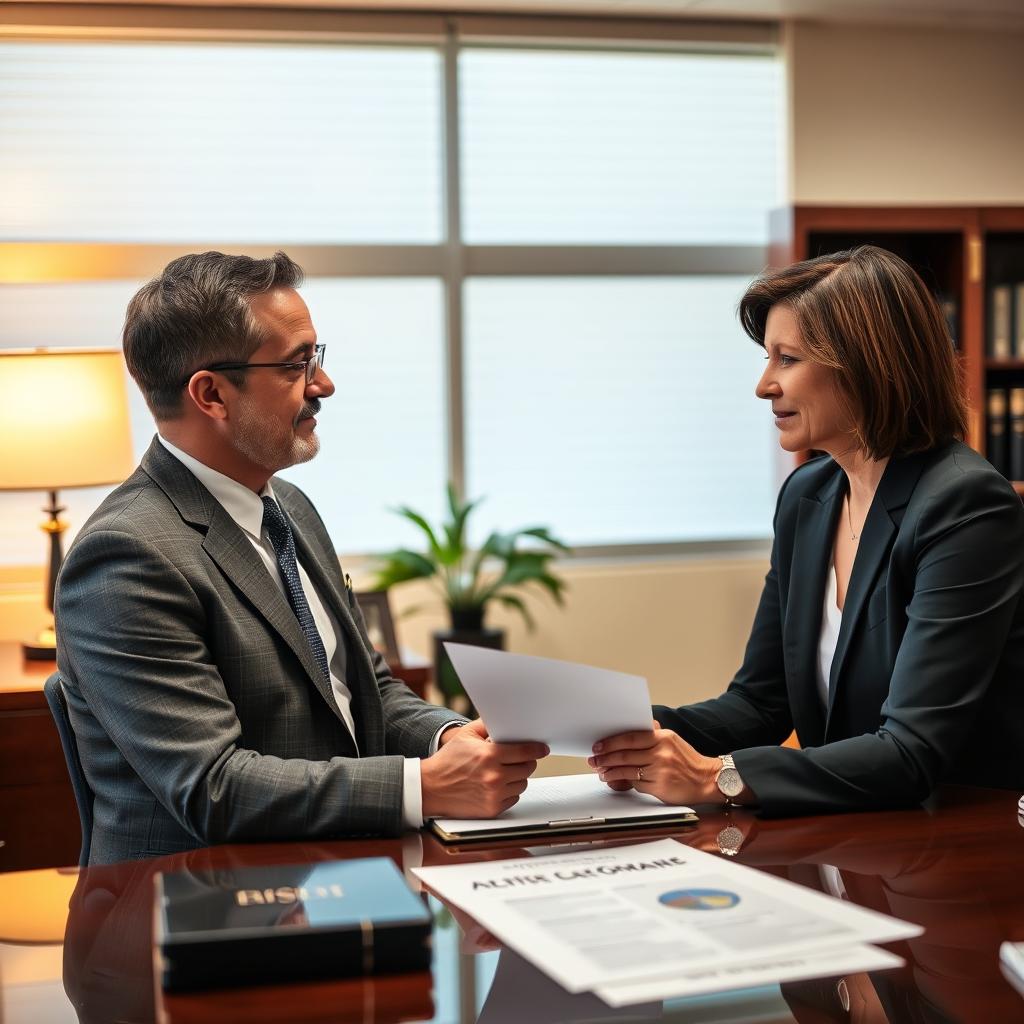
Equitable Distribution Lawyer Falls Church, VA
When a marriage ends in Falls Church, Virginia, dividing property fairly — not necessarily equally — is what the law calls equitable distribution. The Falls Church Circuit Court, located at 300 Park Avenue, Suite 151W, handles all divorce-related property matters under Va. Code § 20‑107.3. Mr. Sris, Owner and Founder of Law Offices Of SRIS, P.C., has practiced in Virginia since 1997 and testified before the Virginia House Courts of Justice Committee in support of 2019 HB 635, which revised subsection (g) of that statute — a provision that directly affects how retirement and pension assets are divided. Our Fairfax Location represents clients at the Falls Church courts, and the firm has 24 documented case results in Falls Church City with favorable outcomes in all reported instances. Results may vary. For a consultation about your equitable distribution concerns, call (888) 437‑7747. Law Offices Of SRIS, P.C. – Advocacy Without Borders.
What Equitable Distribution Means in Falls Church
In Falls Church, Virginia does not divide marital property simply down the middle. Instead, the Circuit Court examines a set of statutory factors to reach a division that is fair under the circumstances. Va. Code § 20‑107.3 lists those factors: each spouse’s contributions to the marriage — both monetary and non‑monetary — the length of the marriage, the ages and health of the parties, how and when the property was acquired, and the tax consequences of any division, among others. The court classifies property as marital, separate, or hybrid; only marital property is subject to division. Separate property, such as pre‑marital assets, gifts, or inheritances received by one spouse alone, generally remains with that spouse.
The Falls Church Circuit Court (300 Park Avenue, Suite 151W, Falls Church, VA 22046) hears all equitable distribution matters. The city’s independent‑city status means that the Circuit Court is a single‑judge forum; cases are managed on the court’s docket alongside guardianship, civil, and criminal matters. Because the property division is so fact‑specific, having counsel familiar with the local court’s expectations — and with the forensic valuation attorneys that frequent that courthouse — is often critical. Law Offices Of SRIS, P.C. has appeared in Falls Church family law matters and works to build a clear record of each spouse’s contributions and the character of each disputed asset.
How Mr. Sris and His Of Counsel Handle Equitable Distribution Cases
For a client seeking an equitable distribution lawyer in Falls Church, VA, Mr. Sris and his Of Counsel begin by working to identify every asset and liability that could be part of the marital estate. That process starts with a thorough client interview and the assembly of financial records — tax returns, bank and brokerage statements, real‑estate deeds, business‑entity documents, and records of retirement accounts. The team evaluates which items are presumptively marital under Virginia law and which may be separate, giving particular attention to any appreciation of separate property during the marriage that might have a marital component.
Where a business, professional practice, or complex portfolio of investments is involved, the firm routinely collaborates with forensic accountants, business‑valuation professionals, and pension‑valuation attorneys. The goal is to present the court with a credible, defensible valuation of every asset so that the judge can apply the statutory factors and reach a fair result. Mr. Sris and his Of Counsel also negotiate and draft comprehensive separation agreements that resolve property division without trial, addressing not only the division itself but also spousal support, retirement‑asset distribution through a qualified domestic relations order (QDRO), and any tax consequences that flow from the division. Throughout the process, the team works to ensure that the client understands the choices being made and the legal reasoning behind each recommendation.
About Mr. Sris and His Of Counsel Team
Mr. Sris, Owner and Founder of Law Offices Of SRIS, P.C., has been practicing law since 1997 and is admitted in Virginia, Maryland, the District of Columbia, New Jersey, and New York. His background as a former prosecutor gives him extensive trial experience that directly informs his approach to contested equitable distribution hearings. Mr. Sris testified before the Virginia House Courts of Justice Committee in support of 2019 HB 635 (chief patron Del. David Bulova) — legislation that revised Va. Code § 20‑107.3(g), the subsection governing the direct payment of a percentage of a marital share of retirement, pension, and profit‑sharing plans.
Alongside Mr. Sris, the firm’s Of Counsel attorneys bring extensive combined legal experience to family law matters in Falls Church and throughout Northern Virginia. The team includes attorneys with backgrounds in criminal law and commercial litigation — perspectives that are often valuable in property‑division cases that involve allegations of undisclosed assets or business‑valuation disputes. Every member of the team works to provide clear, practical advice while advocating for a division that is fair and sustainable for the client’s future.
Frequently Asked Questions
Is Virginia a community property state?
No, Virginia is an equitable distribution state — marital property is divided fairly but not necessarily 50‑50. The court considers the factors listed in Va. Code § 20‑107.3, including the duration of the marriage, the contributions of each spouse, and the liquidity of the assets. In Falls Church, the Circuit Court at 300 Park Avenue applies the same statutory framework as every other Virginia circuit court. Separate property, such as an inheritance or a pre‑marital asset, is generally not subject to division.
How does equitable distribution work in Falls Church, Virginia?
In Falls Church, the Circuit Court first classifies all property as marital, separate, or part‑marital/part‑separate, then values each asset and applies the statutory factors under Va. Code § 20‑107.3 to reach a fair division. The process begins with the filing of a complaint for divorce; the property issues are typically resolved at trial or through a negotiated separation agreement. If the parties agree on the division, they can submit a property settlement agreement to the court for approval, which avoids a contested hearing.
What property gets divided in a Virginia equitable distribution case?
All property that either spouse acquired during the marriage — regardless of whose name is on the title — is presumptively marital and subject to division. This includes real estate, bank and investment accounts, vehicles, business interests, retirement and pension plans, and even the appreciation in value of a separately‑owned business that occurred during the marriage. The court also considers marital debts. Gifts and inheritances received by one spouse alone are generally classified as separate property.
How are retirement accounts and business assets handled?
Retirement accounts, professional practices, and closely held businesses are often among the most valuable and contested assets in a Falls Church equitable distribution case, and dividing them correctly requires a careful valuation. The court may order a qualified domestic relations order (QDRO) for pension or 401(k) plans, allowing the plan administrator to pay a portion of the marital share directly to the non‑employee spouse. For a business, a forensic accountant or business valuator typically prepares a report that the court will weigh along with other evidence. The 2019 revision to Va. Code § 20‑107.3(g) — the provision on which Mr. Sris testified — specifically addressed the procedural framework for direct payment of retirement assets, making it essential to have counsel who understands those changes.
Do I need a lawyer for equitable distribution in Falls Church?
You are not legally required to have a lawyer, but equitable distribution involves complex statutory factors, valuation disputes, and procedural rules that can permanently affect your financial future. An experienced attorney can identify all assets that should be part of the marital estate, work with valuation professionals, and advocate for a division that reflects your contributions. To discuss how Mr. Sris and his Of Counsel team can assist with your equitable distribution matter, contact Law Offices Of SRIS, P.C. at (888) 437‑7747 to request a consultation.
Primary‑source authority:
Va. Code § 20‑107.3 — Equitable Distribution |
Falls Church Circuit Court |
Virginia Judicial System
Attorney advertising. Prior results do not guarantee a similar outcome. Results may vary. Case results depend on a variety of factors unique to each case.