
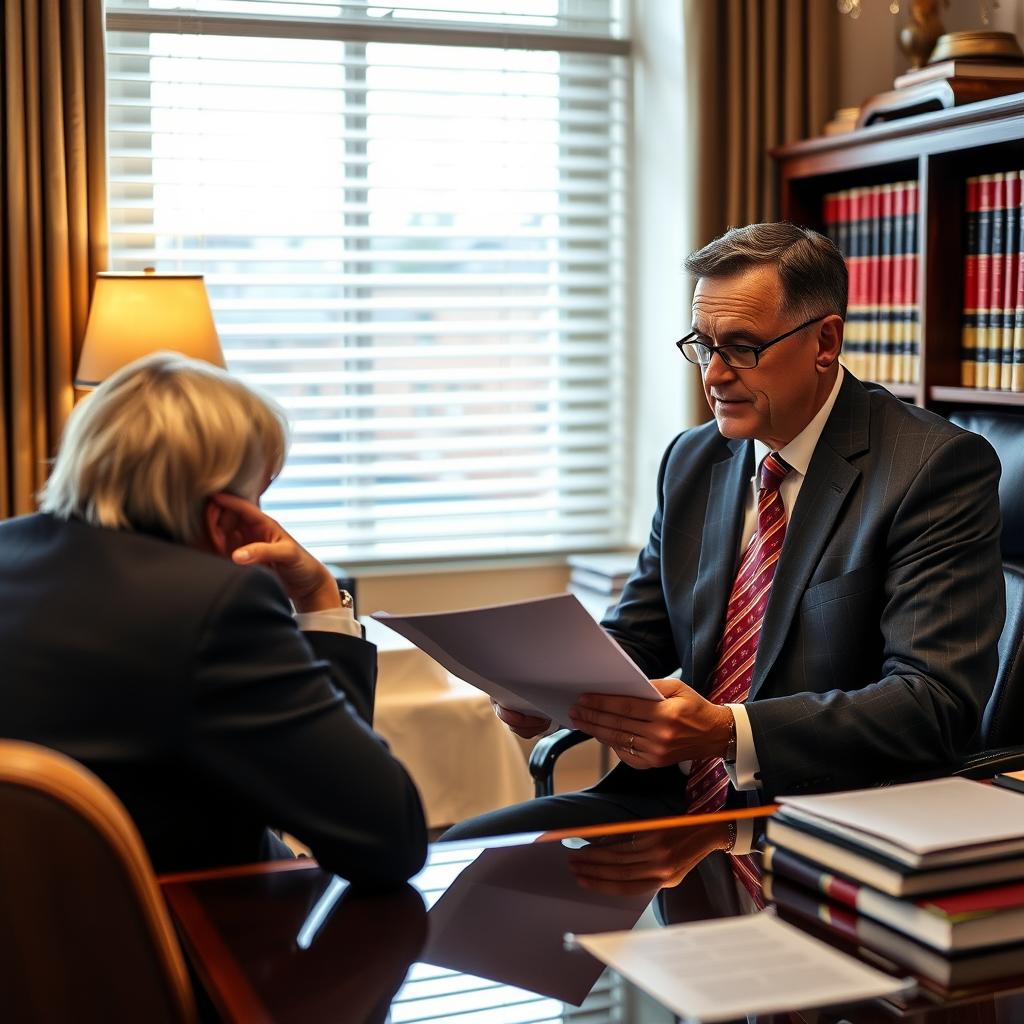
Armed Forces Divorce Lawyer Fairfax County, VA
Divorce involving a service member or military spouse raises questions beyond those in a typical Virginia family law matter. Federal statutes such as the Uniformed Services Former Spouses’ Protection Act (USFSPA) intersect with Virginia’s equitable distribution framework, and the practical realities of deployment, relocation, and military benefits require careful handling. Mr. Sris and his Of Counsel team at Law Offices Of SRIS, P.C. represent clients in Fairfax County whose family law matters involve active-duty personnel, reservists, retired service members, and their spouses. The firm has practiced in Virginia since 1997 and appears regularly before the Fairfax County Circuit Court — which holds exclusive jurisdiction over divorce — and the Fairfax County Juvenile and Domestic Relations District Court for custody, support, and protective orders. To discuss how these issues may apply in your situation, reach Law Offices Of SRIS, P.C. at (888) 437-7747. Law Offices Of SRIS, P.C. — Advocacy Without Borders.
What Armed Forces Divorce Means in Fairfax County
An armed forces divorce in Virginia must satisfy the same residency and grounds requirements as any other divorce, but additional layers of federal law and military regulation shape how property, support, and custody are resolved. The Fairfax County Circuit Court, located at 4110 Chain Bridge Road in Fairfax, hears all divorce actions and applies Va. Code § 20-91 (grounds for divorce) and Virginia’s equitable distribution principles. Meanwhile, the Fairfax County Juvenile and Domestic Relations District Court addresses standalone custody, visitation, and child support matters. When a service member is stationed outside Virginia or deployed, jurisdiction, service of process, and temporary custody orders can become procedurally complex.
The USFSPA, enacted in 1982, allows state courts to treat military disposable retired pay as marital property subject to division — but only if the court has jurisdiction over the member by reason of residence, domicile, or consent. Virginia, as an equitable distribution state, does not mandate a 50/50 split; the court weighs factors such as the length of the marriage overlapping with military service, the contributions of each spouse, and the economic circumstances of the parties. The Servicemembers Civil Relief Act (SCRA) may also affect case timelines if a party seeks a stay of proceedings due to active-duty obligations. Mr. Sris and his Of Counsel work to ensure that these intersecting authorities are addressed early in the process.
Fairfax County’s proximity to the Pentagon, Fort Belvoir, and other military installations means a significant number of family law matters involve active-duty or retired military personnel. The cases can involve division of military pensions under the “10/10 rule” (which governs direct payment from the Defense Finance and Accounting Service rather than the court’s authority to divide the pension), Thrift Savings Plan accounts, Survivor Benefit Plan elections, and the effect of a divorce on military identification card and commissary privileges. Representation in these matters benefits from a practical understanding of both Virginia domestic relations law and the federal statutory overlay.
How Mr. Sris and His Of Counsel Handle Armed Forces Divorce Cases
Mr. Sris and his Of Counsel team begin with a detailed review of the spouses’ financial circumstances, the service member’s career status, and any existing separation or property agreements. Because military pensions are often one of the largest marital assets, early valuation is critical. The team works to classify property as marital or separate under Virginia law, identify which federal benefits are divisible, and draft the Qualified Domestic Relations Order (QDRO)-like language or military pay division order needed to effectuate a division of retired pay. When children are involved, custody and support calculations account for the service member’s often unpredictable schedule and the possibility of relocation under Permanent Change of Station orders.
Mr. Sris and his Of Counsel bring over 120 years of combined legal experience. Results may vary. The firm has achieved over 4,739 documented results. The team coordinates with forensic accountants or pension valuators when necessary, but the overall approach emphasizes straightforward advocacy that focuses on resolving disputes efficiently. For uncontested cases, a comprehensive separation agreement can resolve all issues without trial; for contested matters, the firm prepares for litigation before the Fairfax County Circuit Court and, where appropriate, negotiates toward a settlement that protects the client’s long-term interests. Throughout the process, Mr. Sris and his Of Counsel remain available by phone at (888) 437-7747.
About Mr. Sris and His Of Counsel Team
Mr. Sris, Owner and Founder of Law Offices Of SRIS, P.C., has practiced law since 1997 and is admitted in Virginia, Maryland, the District of Columbia, New Jersey, and New York. His background includes service as a former prosecutor, and he has handled family law matters involving complex asset division, including military pensions and benefits. Mr. Sris testified before the Virginia House Courts of Justice Committee in support of 2019 HB 635 (chief patron Del. David Bulova).
The firm’s Of Counsel attorneys — each an experienced practitioner engaged through Excella — contribute additional perspective and support. On armed forces divorce matters, Mr. Sris leads the representation, and his Of Counsel team assists with case preparation, research, and court appearances. The team’s collective experience includes work with service members and their families across Northern Virginia. No attorney is assigned to handle a case alone; the collaborative model is designed to provide thorough coverage of the legal and practical issues an armed forces divorce presents.
Frequently Asked Questions
Does Virginia law treat military pensions as marital property?
Yes, under the Uniformed Services Former Spouses’ Protection Act, Virginia courts may treat military disposable retired pay as marital property subject to equitable distribution. The court must first have jurisdiction over the service member by reason of residence, domicile, or consent. Once jurisdiction is established, the pension is divided under Virginia’s equitable distribution factors, rather than a rigid 50/50 formula. For guidance on your specific situation, reach Law Offices Of SRIS, P.C. at (888) 437-7747.
What is the “10/10 rule,” and how does it affect my case?
The “10/10 rule” refers to a requirement that the marriage lasted at least ten years and the service member performed at least ten years of creditable military service during the marriage before the Defense Finance and Accounting Service will make direct payments to a former spouse. Even if the ten-year threshold is not met, the court can still award a share of the pension as part of the property division, but the former spouse may need to receive payment from the service member rather than directly from DFAS. To discuss the details of your matter, contact Law Offices Of SRIS, P.C. at (888) 437-7747.
How does deployment or relocation affect child custody in Fairfax County?
When a military parent faces deployment or Permanent Change of Station orders, the Fairfax County Juvenile and Domestic Relations Court can modify custody and visitation arrangements to accommodate the service member’s absence while protecting the child’s relationship with both parents. Virginia’s custody statute (Va. Code § 20-124.3) requires the court to consider the best interests of the child, including the parent’s availability. Temporary orders can delegate visitation to a family member during deployment. For a consultation, reach Mr. Sris and his Of Counsel at (888) 437-7747.
India is not a signatory to the 1980 Hague Convention on Civil Aspects of International Child Abduction.
Can I file for divorce in Fairfax County if my spouse is stationed in another state?
Yes, you may file in Fairfax County provided you meet Virginia’s residency requirement — at least six months of domicile and residence in the Commonwealth. If the service member is not a Virginia resident, the court will need to establish personal jurisdiction, often through the service member’s consent or sufficient contacts with Virginia. The SCRA may allow the service member to request a stay of proceedings if active-duty obligations materially affect their ability to participate. Results may vary.
How does the Servicemembers Civil Relief Act (SCRA) impact a Fairfax County divorce?
The SCRA allows an active-duty service member to request a stay of court proceedings if their military duties materially impair their ability to respond to the divorce action. A stay may extend the timeline of the case, but it does not defeat the court’s ability to eventually hear the matter. Mr. Sris and his Of Counsel address SCRA issues by communicating with the service member’s command when appropriate and working to keep the case moving while respecting federal protections. For guidance on your specific situation, reach Law Offices Of SRIS, P.C. at (888) 437-7747.
What should I bring to a consultation about an armed forces divorce?
You should bring any existing separation agreement, military leave and earnings statements, recent tax returns, information about retirement accounts including the Thrift Savings Plan, and a list of real and personal property acquired during the marriage. If child custody or support is in dispute, school records, a custody journal, and any existing court orders are helpful. The more documentation you can provide, the more efficiently Mr. Sris and his Of Counsel can assess your matter. Contact the firm at (888) 437-7747 to schedule a consultation.
More Fairfax County family law resources:
Prince William County Family Law Lawyer ·
Stafford County Family Law Lawyer ·
Fauquier County Family Law Lawyer ·
Loudoun County Family Law Lawyer ·
Arlington County Family Law Lawyer
Official Virginia Resources:
Virginia Code Title 20 — Domestic Relations ·
Fairfax County Circuit Court
Attorney advertising. Prior results do not guarantee a similar outcome. Results may vary.
Case results depend on a variety of factors unique to each case.