
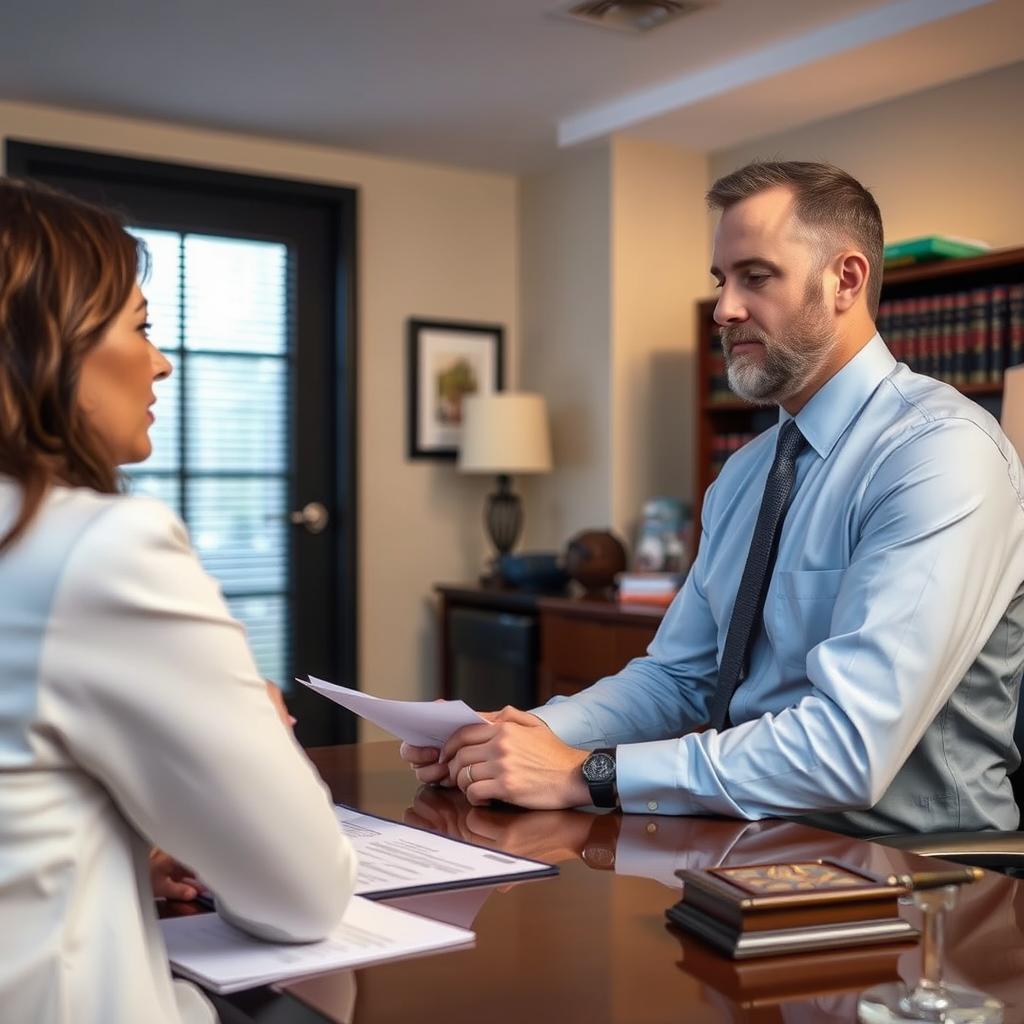
Do I need a lawyer for an uncontested divorce in Fairfax County
You are not legally required to hire a lawyer to obtain an uncontested divorce in Fairfax County. Virginia law permits self-representation, and many couples pursue an uncontested divorce on their own after reaching a full settlement. But an uncontested divorce still demands precise paperwork, compliance with Virginia’s separation requirements, and adherence to the procedures of the Fairfax County Circuit Court. A lawyer can help you avoid missteps that delay the final decree or create unresolved issues that surface later. Mr. Sris and his Of Counsel team have concentrated in family law matters in Northern Virginia for decades and understand how the Fairfax County courts handle uncontested divorce filings. Whether you already have a signed separation agreement or are in the early stages of negotiations, a consultation can clarify your options. To discuss whether legal representation fits your situation, reach Law Offices Of SRIS, P.C. at (888) 437-7747. Law Offices Of SRIS, P.C. – Advocacy Without Borders.
What Uncontested Divorce Means in Fairfax County
An uncontested divorce in Fairfax County is one in which both spouses agree on all material issues—including property division, spousal support, and, if applicable, child custody and child support—and neither spouse contests the divorce itself. The parties typically memorialize their agreement in a written property settlement agreement, which they submit to the Fairfax County Circuit Court along with a divorce complaint. Under Va. Code § 20‑91(9)(a) and (b), Virginia provides no‑fault divorce grounds based on separation: one year of continuous separation, or six months if the couple has no minor children and has entered into a separation agreement. Once the separation period is satisfied, the court can enter a final decree.
Fairfax County’s family law docket is one of the busiest in the Commonwealth. The Circuit Court, located at 4110 Chain Bridge Road in Fairfax, exercises exclusive jurisdiction over the divorce itself, while the Fairfax County Juvenile and Domestic Relations District Court handles any related custody, visitation, or support matters. Even an uncontested divorce requires the filing party to prove the separation period and the validity of any agreement. Virginia practice also requires at least one corroborating witness—often a friend or family member—to appear at the final hearing and confirm the separation. Mr. Sris and his Of Counsel regularly guide clients through these procedural steps, which can feel unfamiliar to someone navigating the process without a lawyer. The firm serves families from Fairfax, Burke, Centreville, Vienna, Reston, McLean, Springfield, and the surrounding communities.
How Mr. Sris and His Of Counsel Handle Uncontested Divorce Cases
When a client comes to Law Offices Of SRIS, P.C. Seeking an uncontested divorce in Fairfax County, the process typically begins with a review of whether the statutory separation period has been met and whether a written settlement agreement exists. If the parties have not yet formalized their understanding, Mr. Sris and his Of Counsel can draft a separation agreement that addresses Virginia’s equitable distribution framework under Va. Code § 20‑107.3, as well as any spousal support and child‑related provisions. Every agreement is tailored to the specific facts of the marriage rather than pulled from a template, reducing the risk that a judge will question its completeness at the final hearing.
Once the separation requirement is satisfied and the agreement is signed, the team prepares and files the divorce complaint in the Fairfax County Circuit Court. They coordinate service of process, manage any required pendente lite motions, and prepare the client and the corroborating witness for the final hearing. Whether the uncontested divorce involves simple facts or more complex property, such as a family business or retirement accounts, the firm works to move the matter forward efficiently. Throughout the engagement, clients communicate directly with a consistent point of contact—never a call center—so that no detail is lost.
About Mr. Sris and His Of Counsel Team
Mr. Sris, Owner and Founder of Law Offices Of SRIS, P.C., has practiced law since 1997. A former prosecutor, he brings a courtroom‑tested perspective to every domestic relations matter. He is admitted to the bars of Virginia, Maryland, the District of Columbia, New Jersey, and New York, and he concentrates his practice on family law, criminal defense, and immigration. His legislative experience includes testifying before the Virginia House Courts of Justice Committee in support of 2019 HB 635 (chief patron Del. David Bulova), which refined the equitable distribution statute. On uncontested divorce matters, Mr. Sris draws on nearly three decades of familiarity with Fairfax County’s judiciary to help clients avoid unnecessary delays.
At his side are a team of Of Counsel attorneys who likewise devote their practices to family law and related areas. All are seasoned litigators; each has well over a decade of practical experience. Collectively, Mr. Sris and his Of Counsel bring extensive combined legal experience to uncontested divorce cases in Fairfax County. Results may vary. The firm serve clients from its Fairfax location at 4008 Williamsburg Court, by appointment only, and can be reached at (888) 437-7747 to schedule a consultation.
Frequently Asked Questions
What are the grounds for an uncontested divorce in Virginia?
An uncontested divorce in Virginia is based on no‑fault grounds under Va. Code § 20‑91(9), which requires a period of continuous separation. If the couple has no minor children and has entered into a signed separation agreement, the separation period is six months. Otherwise, the separation must be at least one year. The divorce is filed as a complaint in the Fairfax County Circuit Court, and the parties must demonstrate the separation was intentional and continuous. Fault grounds such as adultery or cruelty are not used in an uncontested proceeding because the divorce is, by definition, not being contested by either spouse.
How long does an uncontested divorce take in Fairfax County?
The timeline for an uncontested divorce depends primarily on when the mandatory separation period is completed and on the court’s docket. Once the separation requirement is satisfied and the signed agreement and complaint are filed, the final hearing can often be scheduled within a few months. The Fairfax County Circuit Court’s calendar is busy, but uncontested matters generally move faster than contested cases because no trial is needed. Mr. Sris and his Of Counsel work to ensure filings are complete and ready for the judge’s review, which helps prevent continuances that might add weeks or months.
Do I need to appear in court for an uncontested divorce?
In most uncontested divorces in Virginia, at least one party must appear at the final hearing to prove the divorce grounds. The plaintiff—or the defendant if the case is filed as a cross‑complaint—appears with a corroborating witness who can testify about the separation. In some circumstances, and with the court’s permission, the hearing may be held remotely. An experienced lawyer can advise whether your specific situation might qualify for remote participation and can prepare you and your witness to answer the judge’s routine questions confidently and concisely.
Can I use an online divorce service instead of a lawyer?
Online divorce services provide generic forms, but they do not offer legal advice and cannot appear in court with you. An uncontested divorce still involves legal documents that, if incorrectly completed, may be rejected by the Fairfax County Circuit Court or may contain terms that are unenforceable later. A lawyer can review your separation agreement for compliance with Virginia law, identify omitted provisions that might affect your rights, and ensure the final order accurately reflects the agreement. The choice between self‑service and legal representation depends on your comfort level with the procedural requirements and the complexity of your marital estate.
What is a separation agreement and do I need one?
A separation agreement is a written contract between spouses that resolves all marital issues, and it is essential for an uncontested divorce on the six‑month ground. Even when using the one‑year separation ground, a separation agreement is advisable because it memorializes the division of property, debt, spousal support, and child‑related terms. The agreement must be signed by both parties, and Virginia law requires that it be fair and not unconscionable. If the agreement is incomplete or one‑sided, the court may refuse to incorporate it into the final decree. Mr. Sris and his Of Counsel draft agreements that address the specific assets and circumstances of each marriage, helping avoid post‑divorce disputes.
How is property divided in an uncontested divorce?
Virginia is an equitable distribution state, meaning marital property is divided fairly but not necessarily equally. In an uncontested divorce, the spouses decide how to divide their property by mutual agreement, subject to the court’s approval. The separation agreement should classify each asset as marital, separate, or hybrid, and then specify how it will be distributed. Retirement accounts, real estate, and business interests require careful valuation. If the judge finds the division unreasonable, the agreement may be rejected. Because the same agreement governs property, support, and custody, legal review can help ensure the entire arrangement is enforceable.
Primary Sources
For further reference, visit the following official resources (links open in a new tab):
Attorney advertising. Prior results do not guarantee a similar outcome. Results may vary. Law Offices Of SRIS, P.C. serves clients by appointment; contact our Fairfax location at (888) 437-7747 to schedule a consultation.
Case results depend on a variety of factors unique to each case.