
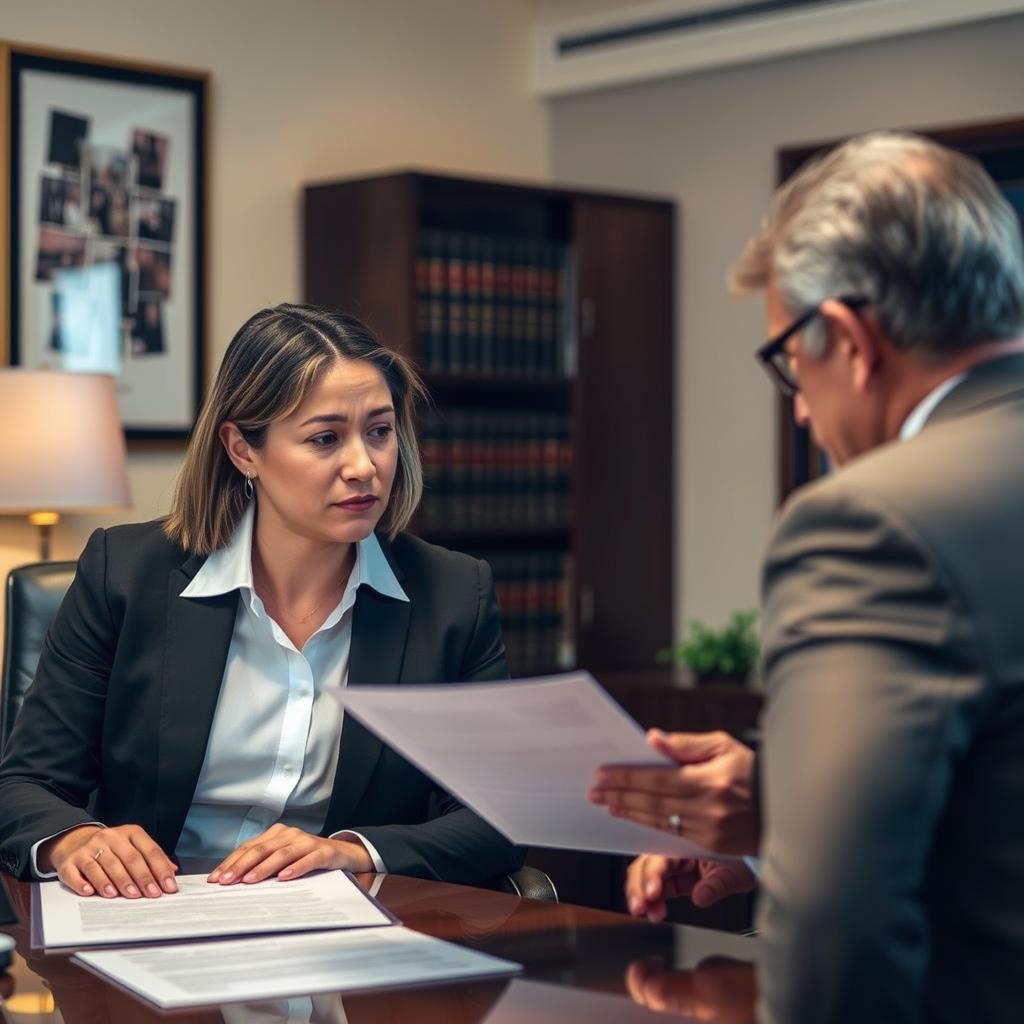
Postnuptial Agreement Lawyer Arlington County, VA
Postnuptial agreements allow married couples in Virginia to define property rights and financial obligations in the event of a divorce or death. At Law Offices Of SRIS, P.C., Mr. Sris and his Of Counsel team have guided Arlington County clients through the drafting, review, and enforcement of these agreements since 1997. The firm’s Arlington location serves individuals and families across Arlington, Crystal City, Rosslyn, Clarendon, Ballston, and Pentagon City. A postnuptial agreement, governed by Virginia’s Premarital Agreement Act, must be carefully drafted to withstand later judicial scrutiny. When a dispute arises—whether during divorce proceedings in the Arlington County Circuit Court or in separate litigation—having an attorney who understands both the statute and the local court’s expectations can make a critical difference. Mr. Sris and his Of Counsel bring extensive combined legal experience to every postnuptial matter. Results may vary. Call (888) 437‑7747 to request a consultation with Mr. Sris or his Of Counsel team. Law Offices Of SRIS, P.C. – Advocacy Without Borders.
What Postnuptial Agreements Mean in Arlington County
In Virginia, postnuptial agreements are enforceable under the Virginia Premarital Agreement Act, Va. Code § 20‑147 et seq. Although the Act’s title references “premarital” agreements, its provisions apply equally to agreements spouses enter after the marriage. Such an agreement may address the division of marital and separate property, spousal support, retirement benefits, business interests, and other financial matters. To be valid, a postnuptial agreement must be in writing, signed by both parties, and entered into voluntarily. Virginia law further requires that the agreement be preceded by a fair and reasonable disclosure of each party’s property and financial obligations, or that each spouse had adequate knowledge of those matters without disclosure.
Arlington County is part of the Seventeenth Judicial District of Virginia. Postnuptial disputes typically arise in the context of a divorce or separate maintenance action, and the Arlington County Circuit Court—located at 1425 N. Courthouse Rd, Suite 2400, Arlington—has exclusive jurisdiction over divorce and equitable distribution proceedings. The Arlington County Juvenile and Domestic Relations District Court handles related custody and support matters, but any challenge to the agreement’s validity or its application to property division is litigated in the Circuit Court. Mr. Sris and his Of Counsel have appeared in Arlington County courts for many years and understand the procedural expectations and judicial temperament that can influence how a postnuptial agreement is received. Parties who live in the urban corridor stretching from Rosslyn to Shirlington, including many federal employees, military personnel, and young professionals, benefit from working with counsel who appreciate both the statutory framework and the practical realities of family law practice in this close‑knit legal community.
How Mr. Sris and His Of Counsel Handle Postnuptial Agreement Cases
The firm’s approach to postnuptial agreements begins with a candid conversation about the client’s goals. Some spouses seek to clarify financial expectations during the marriage; others want to protect a family business, an inheritance, or pre‑marital assets in the event of a divorce. Mr. Sris or one of his Of Counsel will review the client’s financial picture, discuss what Virginia law permits, and advise whether a postnuptial agreement is an appropriate tool. If both spouses are cooperative and have independent counsel, the firm can draft an agreement that reflects a full exchange of financial information and negotiated terms. When the other spouse is unrepresented—or when the matter is contested—the firm focuses on thorough documentation, ensuring the agreement’s terms are transparent and that the negotiating process withstands later fairness review.
If a postnuptial agreement is challenged during a divorce, Mr. Sris and his Of Counsel advocate for its enforcement or, where appropriate, challenge its validity. Common grounds for setting aside a postnuptial agreement include lack of voluntary execution, failure to disclose assets, duress, or unconscionability at the time of enforcement. The firm has experience litigating these issues before the Arlington County Circuit Court, and draws on the extensive combined legal experience of Mr. Sris and his Of Counsel to present a well‑supported position. Results may vary. Whether the matter requires negotiation, mediation, or trial, the firm works toward a resolution that honors the couple’s original intent while safeguarding the client’s legal rights.
About Mr. Sris and His Of Counsel Team
Mr. Sris, Owner and Founder of Law Offices Of SRIS, P.C., is a former prosecutor who has practiced family law since founding the firm in 1997. He is admitted to practice in Virginia, Maryland, the District of Columbia, New Jersey, and New York. Mr. Sris testified before the Virginia House Courts of Justice Committee in support of 2019 HB 635 (chief patron Del. David Bulova), a bill that revised Virginia’s equitable distribution statute. His legislative insight and decades of courtroom experience inform his approach to postnuptial agreements, especially when a marital estate involves complex assets or cross‑jurisdictional issues.
Mr. Sris is joined by a team of Of Counsel attorneys who bring extensive combined legal experience to the firm’s family law practice. Each Of Counsel is engaged through Excella and contributes deep subject‑matter knowledge from prior roles in prosecution, law enforcement, and complex civil litigation. Together, Mr. Sris and his Of Counsel serve clients throughout Arlington County and Northern Virginia, offering the resources of a multi‑state law firm with the attentive service expected of a local practice.
Frequently Asked Questions About Postnuptial Agreements in Arlington County
Are postnuptial agreements enforceable in Virginia?
Yes, postnuptial agreements are enforceable in Virginia under the Virginia Premarital Agreement Act, Va. Code § 20‑147 et seq., provided they meet statutory requirements. The agreement must be in writing, signed by both spouses, and entered into voluntarily. The law also requires a fair and reasonable disclosure of assets and liabilities, or that both parties independently had adequate knowledge of those details. When these conditions are satisfied, Virginia courts will generally enforce the agreement’s terms, although a court may refuse enforcement if the agreement was unconscionable or obtained through fraud.
What should I look for in a postnuptial agreement lawyer in Arlington County?
An Arlington County postnuptial agreement lawyer should be experienced in Virginia family law and familiar with local court practices. Because the Arlington County Circuit Court will adjudicate any dispute over the agreement’s validity, it helps to work with an attorney who knows the Seventeenth Judicial District. Look for counsel who can explain the full‑disclosure standards, negotiate terms that protect your interests, and, if necessary, litigate enforcement of the agreement. Mr. Sris and his Of Counsel have handled marital agreements for decades and appear regularly in Arlington County courts.
Do I need a lawyer to draft a postnuptial agreement in Virginia?
You are not legally required to have a lawyer draft a postnuptial agreement in Virginia, but it is strongly advisable to work with one. A self‑drafted agreement may omit essential disclosures or fail to meet statutory formalities, making it vulnerable to challenge. When each spouse has independent counsel, the agreement is far more likely to withstand judicial review. Even when the parties are cooperating, having an attorney ensures that the document accurately reflects both the letter of the law and the couple’s true intentions.
Can a postnuptial agreement be changed or revoked?
Yes, a postnuptial agreement can be amended or revoked only by a written agreement signed by both spouses. Virginia law requires the same level of formality to modify or terminate a postnuptial agreement as to create one. A mere oral agreement is insufficient. If one spouse wants to change the terms, both must consent and sign a new written instrument. A court will not revise the agreement simply because one party’s circumstances have changed, unless the agreement itself provides for modification or a legal ground to set it aside exists.
What happens if a postnuptial agreement is challenged during a divorce in Arlington County?
If a postnuptial agreement is challenged during a divorce in Arlington County, the Arlington County Circuit Court will determine its enforceability. The party seeking to avoid the agreement must prove a defect such as involuntary execution, failure to disclose assets, or unconscionability. Mr. Sris and his Of Counsel have experience litigating these issues, and they work to present evidence that supports the agreement’s validity. The outcome depends on the specific facts, and the court has discretion under Virginia law to enforce all, part, or none of the agreement.
How can I request a consultation about a postnuptial agreement in Arlington County?
Reach Law Offices Of SRIS, P.C. at (888) 437‑7747 to schedule a consultation with Mr. Sris or his Of Counsel team. During the appointment, the attorney will discuss your financial situation, explain how Virginia law applies to your goals, and outline the steps for drafting or reviewing a postnuptial agreement. Consultations are available by appointment, and the firm’s Arlington location serves clients throughout the county. For additional information, you may also visit the firm’s family law practice pages or the Virginia court’s official website.
Our family law practice also serves clients in Fairfax County, Prince William County, Stafford County, Fauquier County, and Loudoun County. To learn more, visit our pages for Fairfax County family law lawyer, Prince William County family law attorney, Stafford County family law representation, Fauquier County family law services, and Loudoun County family law counsel.
For Virginia statutory authority, consult Virginia Code Title 20 and the Virginia Judicial System website.
Attorney advertising. Prior results do not guarantee a similar outcome. Results may vary.
Case results depend on a variety of factors unique to each case.