
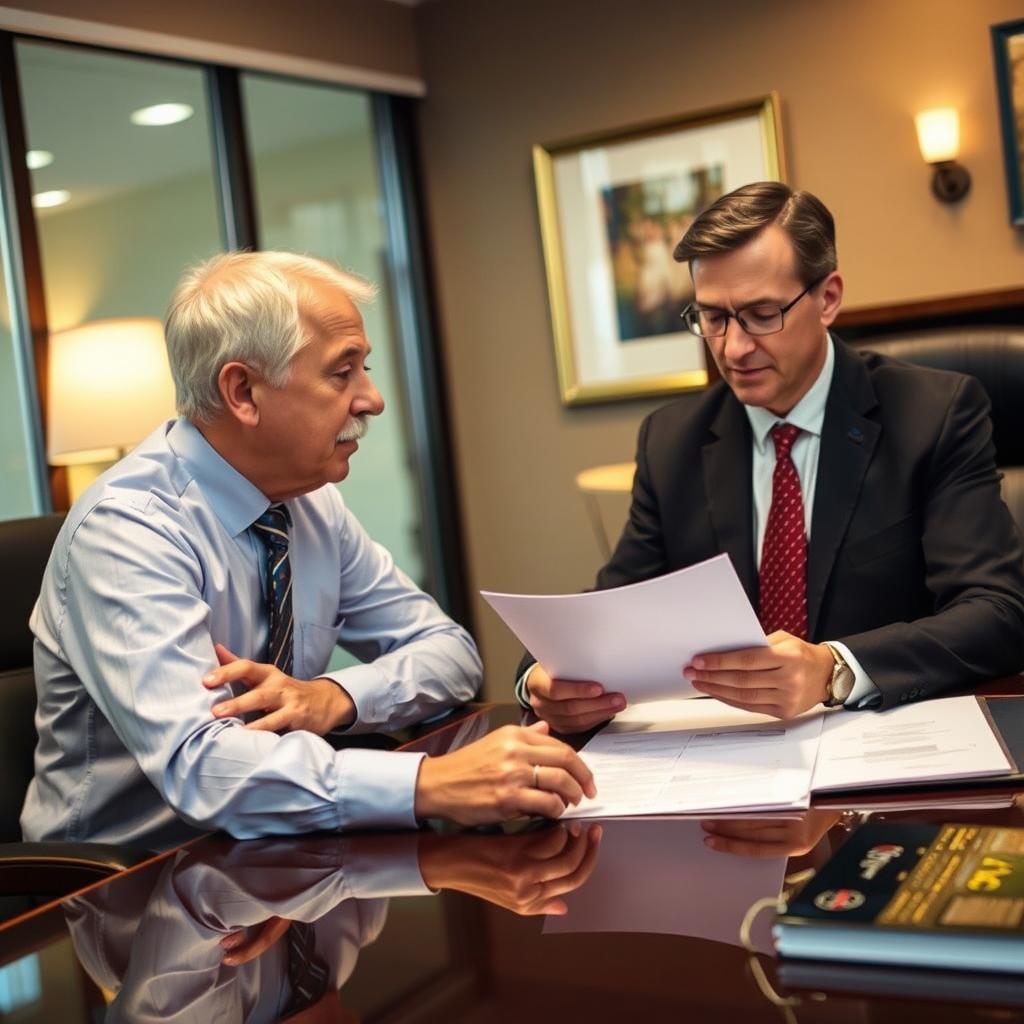
Post Divorce Modification Lawyer Falls Church, VA
When a divorce decree no longer reflects your current circumstances, seeking a modification through the Virginia courts is often necessary. At Law Offices Of SRIS, P.C., Mr. Sris and his Of Counsel concentrate on post‑divorce modifications for clients in Falls Church and throughout Northern Virginia. Our Fairfax location, at 4008 Williamsburg Court, Fairfax, VA 22032, serves individuals and families who need to adjust spousal support, child support, or custody orders. The firm has practiced family law since 1997 and has documented 4,739+ case results across all practice areas. Results may vary. To discuss your modification matter, call (888) 437‑7747 to schedule a consultation. Law Offices Of SRIS, P.C. – Advocacy Without Borders.
What Post Divorce Modification Means in Falls Church, Virginia
Under Virginia law, a divorce decree is not necessarily the final word. When a party can show that circumstances have materially changed since the entry of the order, the court has the authority to modify provisions concerning spousal support, child support, or custody. Virginia is an equitable‑distribution state (Va. Code § 20‑107.3), and the same equitable principles that applied at the time of the divorce continue to guide post‑divorce modifications.
In Falls Church, modification proceedings follow a dual‑court structure. The Falls Church Circuit Court at 300 Park Avenue, Suite 151W, handles all modifications involving equitable distribution and spousal support. The Falls Church Juvenile and Domestic Relations District Court is the proper venue for standalone custody, visitation, and child‑support modifications. Understanding which court has jurisdiction over your particular issue is the first step our attorneys take when evaluating a potential modification.
Mr. Sris and his Of Counsel are familiar with the procedural expectations of both courts. In the Circuit Court, modifications often require the filing of a Complaint and the service of process on the opposing party, followed by discovery, negotiations, and, if necessary, a hearing. The J&DR court follows a somewhat more streamlined path but demands the same level of preparation. Because Virginia judges have broad discretion when weighing factors such as changes in income, relocation, or the best interests of the child, presenting a clear, well‑documented case is essential.
How Mr. Sris and His Of Counsel Handle Post Divorce Modification Cases
Every modification case begins with a thorough evaluation of whether a material change in circumstance exists. Our attorneys review the existing order, gather updated financial information, and assess the evidence that will be presented to the court. Rather than relying on assumptions, Mr. Sris and his Of Counsel build each case on the specific facts and the applicable Virginia statutory framework, including the factors listed in Va. Code § 20‑107.1 (spousal support) and § 20‑108.1 (child support guidelines).
Once the grounds for modification are established, the firm files the necessary pleadings in the appropriate Falls Church court. The process typically involves negotiation with the opposing party or their counsel. Many modifications are resolved by consent through a revised court order, which can save both time and expense. When agreement cannot be reached, the matter proceeds to a hearing where the court determines whether the requested changes are warranted.
Throughout the case, our attorneys remain focused on achieving a practical outcome that reflects the current realities of the parties’ lives. While no attorney can guarantee a particular result, the firm’s decades of experience in Virginia family law allow it to present each modification petition with the documentation and legal reasoning the court requires.
About Mr. Sris and His Of Counsel Team
Mr. Sris, Owner and Founder of Law Offices Of SRIS, P.C., has practiced family law in Virginia since 1997. A former prosecutor, he brings a trial‑tested perspective to every case. His legislative involvement includes testifying before the Virginia House Courts of Justice Committee in support of 2019 HB 635 (chief patron Del. David Bulova), a bill that refined certain aspects of Virginia’s equitable‑distribution statute.
Mr. Sris and his Of Counsel bring over 120 years of combined legal experience, providing experienced counsel in Virginia family law matters. Results may vary. Their practice concentrates in the areas that are most frequently the subject of post‑divorce disputes — spousal support adjustments, child‑support recalculations, and custody modifications.
Frequently Asked Questions
What qualifies as a material change in circumstances for a post‑divorce modification in Virginia?
A material change is a significant alteration in the financial or personal circumstances of either party that was not anticipated at the time of the original divorce decree. Examples include a substantial increase or decrease in income, involuntary job loss, relocation, remarriage, or a change in the child’s needs. The court evaluates whether the change is durable and whether it makes the original order unreasonable. Not every change justifies a modification; the moving party must show that the new facts are sufficient to warrant the court’s intervention.
Can child support be modified if my income changes?
Yes, a substantial change in income can support a petition to modify child support in Virginia. Virginia uses statutory guidelines (Va. Code § 20‑108.1) that calculate support based on the combined gross income of both parents. If one parent’s income rises or falls significantly, the presumptive amount may shift. The party seeking the change must file with the appropriate Falls Church court—typically the J&DR District Court if support was originally set there—and present updated financial documentation. The court retains discretion to deviate from the guidelines if the guideline amount would be unjust.
How do I request a modification of spousal support in Falls Church?
To modify spousal support, you must file a motion or complaint in the Falls Church Circuit Court and demonstrate a material change in circumstances. The court considers the factors listed in Va. Code § 20‑107.1, including each spouse’s income, earning capacity, and needs. The party seeking modification bears the burden of proof. The process may require discovery, such as exchanging pay stubs, tax returns, and bank records, and often involves a negotiation phase before a hearing is scheduled.
Do I need a lawyer for a post‑divorce modification in Virginia?
While you are not legally required to have a lawyer, the procedural and evidentiary demands of a modification make experienced legal counsel advisable. The court will expect you to meet the same standards as a represented party: you must know which court to file in, the correct forms to use, the deadlines to meet, and the evidence to present. An attorney can evaluate the strength of your modification claim, help gather and organize financial information, and present your position persuasively to the court.
What is the process for modifying a divorce decree in Falls Church?
The modification process begins with a petition or complaint filed in the Falls Church court that has jurisdiction over the issue you seek to change. For spousal support and equitable‑distribution matters, that is the Circuit Court; for child custody and support, it is the Juvenile and Domestic Relations District Court. After filing, the opposing party must be served and given an opportunity to respond. The court may schedule a preliminary hearing or order mediation. If no settlement is reached, a final hearing is held where each side presents evidence. The court then issues a new order modifying the original decree.
What should I bring to a consultation about a modification?
Bring a copy of your current divorce decree and any prior modification orders, recent pay stubs or proof of income, tax returns, and documentation of changed circumstances. If the modification involves child support, bring evidence of child‑care costs, health‑insurance premiums, and any special needs of the child. Having these documents ready allows our attorneys to begin assessing the viability of your modification request during the initial consultation and gives you a clearer picture of what to expect.
Related resources:
Family Law in Fairfax County |
Family Law in Fairfax City |
Family Law in Prince William County |
Family Law in Manassas City
Virginia primary sources:
Virginia Code Title 20 (Domestic Relations) |
Virginia Circuit Courts
Attorney advertising. Prior results do not guarantee a similar outcome.
Case results depend on a variety of factors unique to each case.