
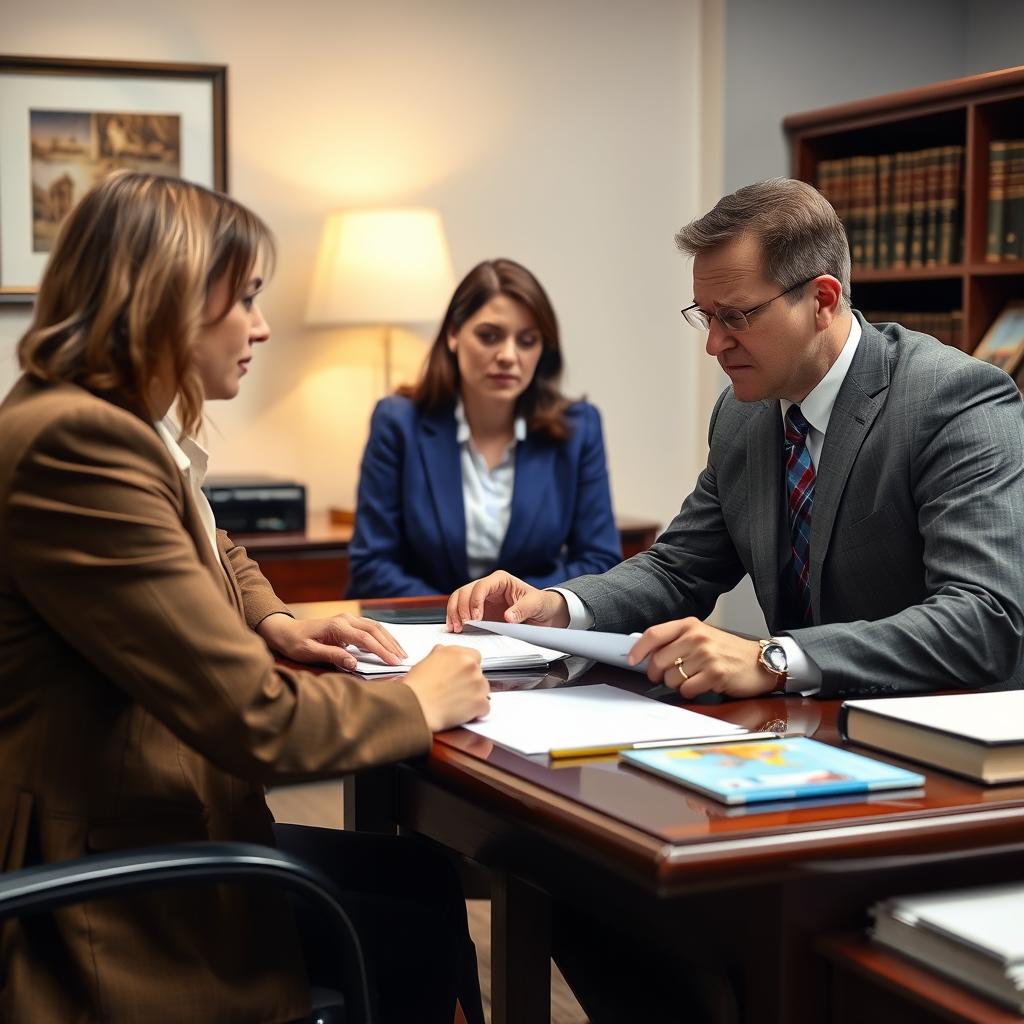
Legal Custody Lawyer Arlington County, VA
Legal custody determines which parent has the authority to make major decisions about a child’s upbringing—decisions about education, healthcare, religious instruction, and general welfare. In Arlington County, Virginia, these matters are resolved under the Virginia Child Custody and Visitation statutes, with the child’s best interests serving as the controlling standard under Va. Code § 20-124.2 and the detailed factors enumerated in § 20-124.3. Whether legal custody is contested at the outset of a separation, as part of a divorce proceeding, or when parents seek to modify an existing arrangement, the process is shaped by both the statutory framework and the practices of the Arlington County Juvenile and Domestic Relations District Court. For custody disputes that arise within a divorce, the Arlington County Circuit Court may also exercise jurisdiction over the matter. Understanding how Virginia law treats legal custody and how the local courts apply those standards is critical for any parent navigating this process. Mr. Sris and his Of Counsel serve clients across Arlington, Crystal City, Rosslyn, Clarendon, Ballston, Pentagon City, and Shirlington. To discuss your legal custody matter, reach Law Offices Of SRIS, P.C. at (888) 437-7747. Law Offices Of SRIS, P.C. – Advocacy Without Borders.
What Legal Custody Means in Arlington County, Virginia
In Virginia, legal custody is distinct from physical custody. While physical custody concerns where the child lives and the day-to-day care schedule, legal custody addresses the right and responsibility to make major decisions about the child’s life. Under the Virginia Code, a court may award sole legal custody to one parent or joint legal custody to both parents. Joint legal custody means both parents share the decision-making authority, even if the child resides primarily with one parent. The court’s analysis always begins with the trusted-interests-of-the-child standard set forth in Va. Code § 20-124.3, which requires consideration of ten specific factors, including each parent’s relationship with the child, the child’s needs, each parent’s willingness to support the child’s relationship with the other parent, the reasonable preference of a child of sufficient maturity, and any history of family abuse.
Arlington County’s proximity to Washington, D.C., and its highly mobile, professional population can raise nuanced custody issues. Parents may work for federal agencies, military branches, or international organizations, and their careers sometimes require relocation. Relocation matters are governed by Va. Code § 20-124.5, which requires a parent intending to relocate to provide at least thirty days’ advance written notice to the court and the other parent. In an urban county where both parents often have demanding careers, the Juvenile and Domestic Relations Court evaluates custody proposals with careful attention to each parent’s availability and the quality of the parenting plan. Cases filed in Arlington County are heard at the courthouse located at 1425 N. Courthouse Rd, Suite 2400, Arlington, VA 22201. For legal custody disputes that are part of a divorce action, the Arlington County Circuit Court at the same address handles the matter alongside the divorce and any related issues of equitable distribution and spousal support.
How Mr. Sris and His Of Counsel Handle Legal Custody Cases
Mr. Sris and his Of Counsel take a structured approach to legal custody matters in Arlington County, beginning with a thorough evaluation of the facts under the Virginia best-interests factors. The team reviews the child’s current living situation, each parent’s involvement in education and healthcare decisions, any history of difficulties in communication between the parents, and any relevant prior court orders. When joint legal custody is a realistic possibility, the firm works with clients to craft a detailed parenting plan that addresses decision-making protocols, dispute-resolution mechanisms, and a schedule that accommodates both parents’ professional and personal responsibilities. If sole legal custody is sought, the team prepares evidence to demonstrate why shared decision-making would not serve the child’s best interests, consistent with the statutory factors.
The process in Arlington County typically involves mediation, negotiation, or litigation before the Juvenile and Domestic Relations Court. Mr. Sris and his Of Counsel draw on extensive experience in Virginia family law to present a clear, fact-based case to the court. When a custody matter is intertwined with a divorce before the Circuit Court, the team coordinates the custody position with the broader divorce strategy. Because legal custody orders may be modified when there has been a material change in circumstances, the firm also helps clients understand their options for future modification or enforcement. Throughout the representation, the team remains available to answer questions and to help clients focus on long-term outcomes that support the child’s stability and welfare.
About Mr. Sris and His Of Counsel Team
Mr. Sris, Owner and Founder of Law Offices Of SRIS, P.C., established the firm in 1997 and has concentrated his practice on family law, criminal defense, and immigration. He is admitted in Virginia, Maryland, the District of Columbia, New Jersey, and New York. Mr. Sris has handled family law matters in Virginia for over two decades and brings a practical, results-oriented perspective to legal custody disputes. His Of Counsel, engaged through Excella, include attorneys with backgrounds in litigation and family law who work collaboratively with Mr. Sris on each case. Mr. Sris and his Of Counsel bring over 120 years of combined legal experience and have secured 4,739+ documented firm-wide results. Results may vary.
Frequently Asked Questions
What is the difference between legal custody and physical custody in Virginia?
Legal custody refers to the authority to make major decisions about a child’s upbringing, while physical custody concerns where the child lives and the daily care schedule. Under Virginia law, a court may award sole or joint legal custody and sole or joint physical custody independently. The trusted-interests standard under Va. Code § 20-124.3 governs both determinations. Parents may share legal custody even if one parent has primary physical custody, allowing both to participate in decisions about education, healthcare, and religious upbringing.
How does the court decide legal custody in Arlington County?
The Arlington County Juvenile and Domestic Relations Court decides legal custody based on the ten statutory best-interests factors in Va. Code § 20-124.3. These factors include the child’s age and condition, each parent’s relationship with the child, each parent’s role in the child’s life, the child’s needs, and any history of abuse. The court encourages parents to agree on a parenting plan, but when agreement is not possible, the judge makes the determination after hearing evidence from both sides.
Can I get joint legal custody if the other parent disagrees?
Yes, a court can order joint legal custody even when one parent opposes it, if it serves the child’s best interests. The court will evaluate whether the parents can communicate and cooperate sufficiently to make joint decisions. If the history shows persistent conflict that would harm the child, the court may instead grant sole legal custody to one parent. The decision is always guided by the statutory factors, not solely by the parents’ preferences.
How does relocation affect legal custody in Arlington County?
Relocation triggers statutory notice requirements and may result in a custody modification if the move materially affects the child’s best interests. Under Va. Code § 20-124.5, a parent intending to relocate must provide at least thirty days’ advance written notice to the court and the other parent. When relocation is contested, the court examines the impact on the child’s stability, the existing custody arrangement, and the relocating parent’s reasons. In an area like Arlington County, where professional moves are common, this issue arises frequently.
What role does mediation play in legal custody cases?
Mediation is a voluntary process that can help parents reach an agreement on legal custody without a contested hearing. In Arlington County, parties may participate in mediation through the court’s services or by hiring a private mediator. While not mandatory in Virginia, mediation can reduce conflict and allow parents to create a custody plan that reflects their unique circumstances. If agreement is reached, it is presented to the court for approval and incorporation into a custody order.
Can legal custody orders be modified after they are entered?
Yes, legal custody orders can be modified if a material change in circumstances has occurred since the last order and modification serves the child’s best interests. The party seeking modification must prove both the change and that the proposed modification benefits the child. Common changes include a parent’s relocation, a change in the child’s needs, or a parent’s inability to fulfill their decision-making responsibilities. The Arlington County Juvenile and Domestic Relations Court has jurisdiction over modification petitions.
Do grandparents have legal custody rights in Virginia?
Grandparents may petition for custody or visitation in limited circumstances, but the primary consideration remains the child’s best interests. Virginia law permits a grandparent to seek custody when both parents are unfit or when extraordinary circumstances exist. The court balances the parent’s fundamental right to raise their child with the grandparent’s role in the child’s life. Grandparent custody cases in Arlington County are fact-intensive and resolved on a case-by-case basis.
How long does a legal custody case take in Arlington County?
The timeline varies depending on whether the parents agree on a parenting plan, the court’s calendar, and the complexity of the issues. If parents can reach an agreement, a consent order may be entered relatively quickly. Contested custody disputes that require multiple hearings or the appointment of a guardian ad litem can extend over several months. The firm works to keep the process moving while ensuring the court receives a comprehensive presentation of the relevant facts.
What if one parent is not following the legal custody order?
If a parent violates a legal custody order, the other parent may seek enforcement through a show cause or contempt proceeding. The Arlington County Juvenile and Domestic Relations Court has authority to enforce its orders. The filing parent must demonstrate that the other parent willfully failed to comply with a clear provision of the order. Possible remedies include make-up decision-making authority, attorney fees, or, in serious cases, sanctions.
Do I need a lawyer for a legal custody dispute in Arlington County?
You are not required to have a lawyer, but the complexity of Virginia’s custody laws and the courtroom procedures make experienced representation highly advisable. A lawyer can help you gather the right evidence, present the trusted-interests factors persuasively, and navigate procedural requirements. Mr. Sris and his Of Counsel bring extensive experience in Arlington County custody matters. To discuss your situation, contact Law Offices Of SRIS, P.C. at (888) 437-7747.
For guidance on your specific situation, reach Law Offices Of SRIS, P.C. at (888) 437-7747.
Related family law pages: Fairfax County Family Law · Prince William County Family Law · Stafford County Family Law · Fauquier County Family Law · Loudoun County Family Law
Virginia legal resources: Virginia Code Title 20 (Domestic Relations) · Virginia Judicial System
Attorney advertising. Prior results do not guarantee a similar outcome.
Case results depend on a variety of factors unique to each case.